Daily Current Affairs

Stay ahead with organized updates across various categories.

Clear
Govt. plans security protocol for fishing harbours under CISF oversight

Govt. plans security protocol for fishing harbours under CISF oversight

29 May 2026
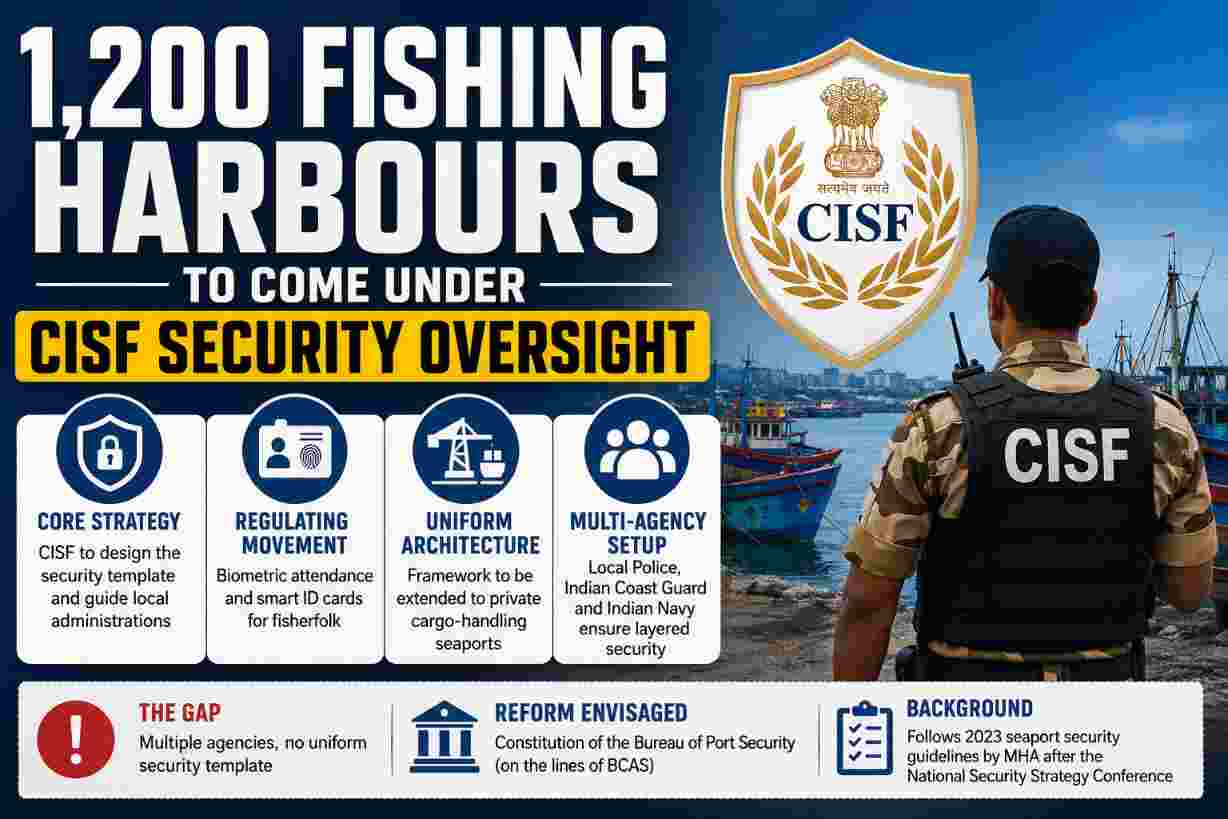
Syllabus Relevance: GS-III (Internal Security; Security challenges and their management in border areas) 1. Key Development The Union Ministry of Home Affairs (MHA) plans to bring nearly 1,200 fishing harbours and fish landing sites under the security oversight of the Central Industrial Security Force (CISF). This follows the prior designation of the CISF as the security regulator for over 250 seaports in the country. 2. Core Strategy & The CISF's Role Security Regulator: Physical deployment at all sites is not possible; CISF will instead design the security template and guide local administrations in managing protocols. Regulating Movement: Introducing a biometric attendance system and smart ID cards for fisherfolk. Uniform Architecture: The government intends to deploy this "sovereign entity" framework at private cargo-handling seaports as well. 3. Current Administrative Setup Total Hubs: There are 1,547 notified fish landing centres and fishing harbours across 13 coastal States and UTs. Dual Governance: States: Responsible for post-construction management, maintenance, and operation of harbours under their control. Center: Harbours under Central control are managed by Port Trusts (under the Ministry of Fisheries). Multiple Security Agencies: Deployment stretches from local police on land/shore, to the Indian Coast Guard, and the Indian Navy further out at sea. 4. Identified Gaps & Reforms Envisaged The Gap: The involvement of multiple agencies has resulted in the absence of a uniform security template. Bureau of Port Security: The MHA is planning the constitution of this dedicated body for the security of vessels and port facilities, modeled on the Bureau of Civil Aviation Security (BCAS). Background Guidelines: This follows the seaport security guidelines issued by the Home Ministry in 2023 after deliberations at the National Security Strategy Conference.

Operation Ragepill: Massive Drug Crackdown

Operation Ragepill: Massive Drug Crackdown

17 May 2026
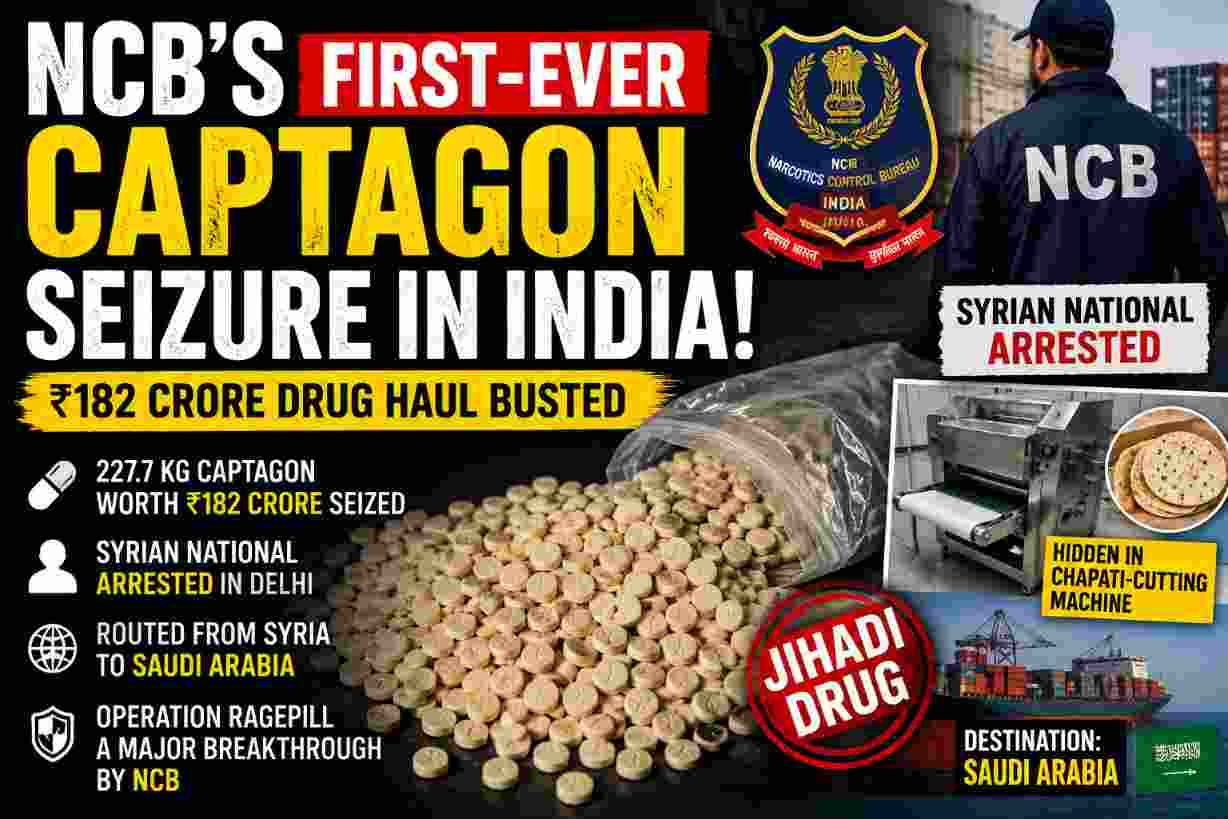
Why in News? The Narcotics Control Bureau (NCB) busted an international drug trafficking syndicate and seized 227.7 kg of Captagon worth around ₹182 crore. A Syrian national was arrested during the operation named “Operation Ragepill.” Key Highlights Major Seizure First-ever seizure of Captagon in India. Total drugs seized: 31.5 kg from Delhi’s Neb Sarai 196 kg from Mundra Port, Gujarat Estimated value: ₹182 crore Arrest Syrian national Alabras Ahmad arrested. He entered India on a tourist visa in November 2024. Visa expired in January 2025; he was staying illegally. Smuggling Route Drugs were allegedly being routed: Syria → India → Saudi Arabia & West Asia Captagon tablets were hidden inside: a chapati-cutting machine a shipment declared as sheep wool What is Captagon? About Captagon is a synthetic stimulant drug. Main ingredient: Fenethylline Produces: high alertness euphoria reduced fatigue Why Called “Jihadi Drug”? Reportedly abused in conflict zones and by extremist groups in West Asia. Linked to illegal drug networks in the Middle East. Operation Ragepill Conducted by the Narcotics Control Bureau. Based on intelligence shared by a foreign drug law-enforcement agency. Demonstrates growing international cooperation against narcotics trafficking. Government Statement Amit Shah reiterated the government’s policy of “Zero Tolerance Against Drugs” and emphasized the vision of a Drug-Free India. Exam Relevance Prelims Captagon Fenethylline NCB International drug trafficking routes Operation Ragepill Mains Internal Security / International Relations India as a transit point for narcotics Challenges of transnational organized crime Need for global cooperation in anti-drug operations